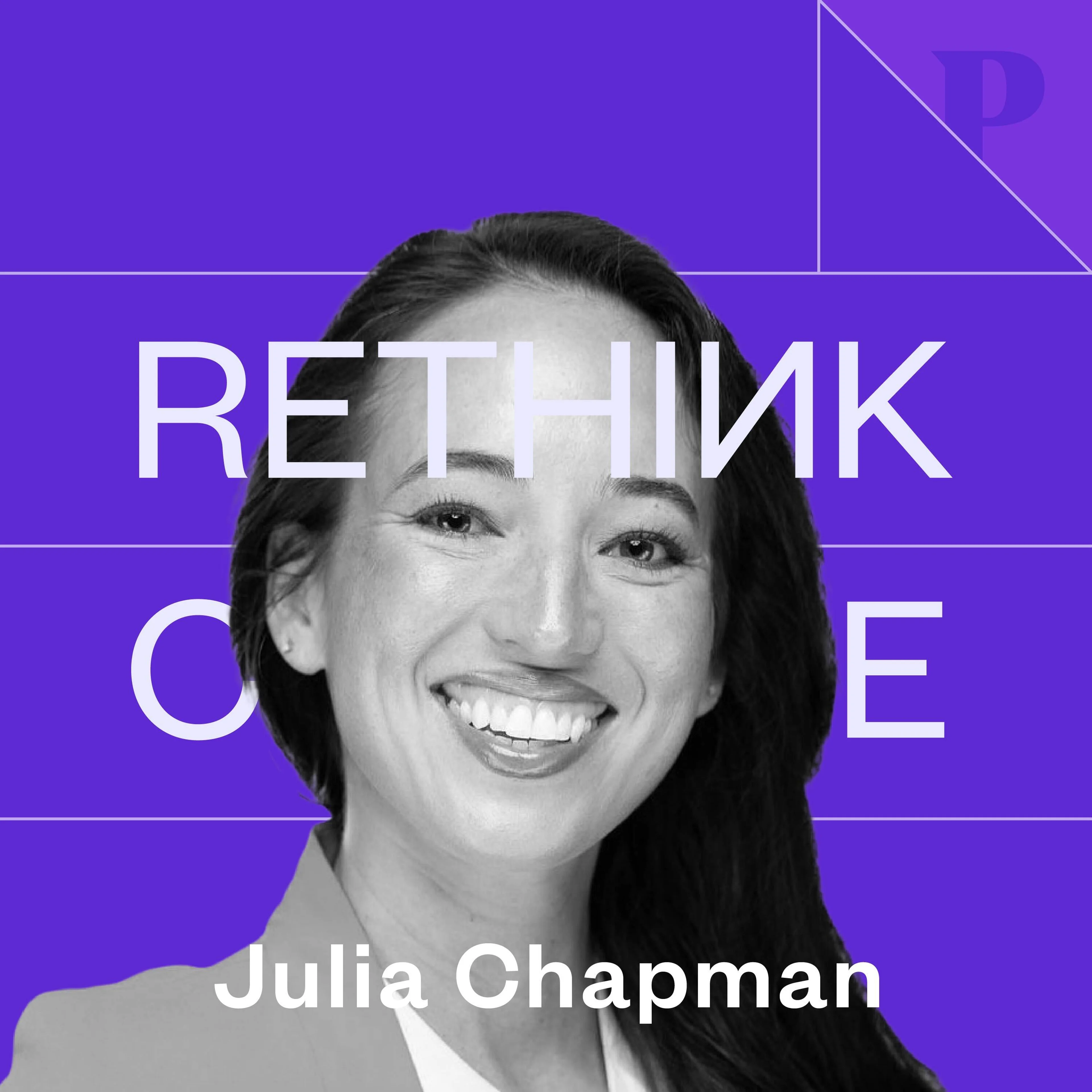
24 — Leading Change at the Intersection of Science, Strategy, and Transformation with Julia Chapman, Vice President of Program and Portfolio Management at Latigo Biotherapeutics
Some leaders grow through intention. Others grow through fire. And then there are leaders like Julia Chapman, who evolve through a rare combination of curiosity, serendipity, and the willingness to tackle problems most people would run from. Our guest this week doesn’t shy away from the hard stuff. She uses her engineering mindset to run full force into challenges and leads her team to do the same.
Shownotes
Things to ponder
Some leaders grow through intention. Others grow through fire. And then there are leaders like Julia Chapman, who evolve through a rare combination of curiosity, serendipity, and the willingness to tackle problems most people would run from. Our guest this week doesn’t shy away from the hard stuff. She uses her engineering mindset to run full force into challenges and leads her team to do the same.
In this episode of Rethink Change, Julia Chapman, Vice President of Program and Portfolio Management at Latigo Biotherapeutics, takes us inside a career shaped by unexpected pivots, from filing records in a Novartis plant to designing pandemic response frameworks that later influenced global vaccine development.
Throughout their conversation, Julia talks openly about what it takes to lead in an industry filled with uncertainty. She explains how she breaks down complex scientific challenges, how she communicates value to investors who expect clear direction, and how she’s learned to step back as a leader so her team can step forward. She also shares why understanding the problems above your role is one of the most important skills you can develop, no matter where you are in your career.
- Resources
- Find Julia on LinkedIn
- Chapters:
- 00:00 Intro to Guest: Julia Chapman: Using Science and Strategy to Lead Change
- 01:19 From Duke & Med School Dreams to Novartis Records Room
- 04:48 Serendipity & Sponsorship: How Chance and Mentors Shape a Career
- 06:50 Pandemic Planning, mRNA, and Biotech Innovations at Novartis
- 12:02 Inside Latigo Biotherapeutics: Non-Opioid Pain and Nav1.8
- 15:13 Why Pain Is So Hard to Treat—and Where Current Drugs Fall Short
- 17:09 Making the Case: Communicating Value to Investors and Pharma Partners
- 23:48 Why This Team Will Win: Expertise, Vision, and Smarter Clinical Design
- 32:03 Scaling Yourself: Letting Go of the Details and Building Strong Teams
- 37:04 Career Advice for Emerging Leaders: Don’t Fear Hard Problems
- 42:04 Final Thoughts on Key Leadership Lessons
Transcript
[00:00:00] J ulia
C hapman: If people understand what problem their boss is trying to solve, are you thinking like a VP ? Are you thinking like a C-suite level executive? And that's one of the biggest differences. Like if you take the second to understand how those things connect, you don't forget. It's not something that you memorize, like if you understand how it works, that's now knowledge that you live with. If you live with that knowledge, you can apply that. So many different ways. Don't be scared of hard problems. Have some kind of problem solving process, and figure out the right way for the team to work through it. [00:00:45] M att P ennebaker: Today on Rethink Change, we're joined by Julia Chapman, a leader who's spent her career at the intersection of science, strategy and transformation. She's helped guide programs at some of the most influential names in biotech, and now serves as senior Vice President of program and portfolio management at Latigo Biotherapeutics, where she's shaping the future of non-opioid pain therapeutics. Julia, welcome to Rethink Change. So I think what would be helpful is, just for starters, why don't you give a Cliff note summary of your career and what got you to the position you are today at Latigo.
Julia Chapman:[00:01:19] Sure. So, uh, I studied biomedical engineering at Duke and had this really, uh, ambitious goal of wanting to help. Be a change maker in bringing better medicines to patients. This concept, uh, when I, when I went to Duke, you know, there was a, a big focus on genetics. I was very interested in particular in understanding how you really get to the root cause of disease, um, including how our genetics play a role there. And I was very fascinated by this concept of precision medicine or, you know, we were finally now starting to generate the understanding of what was. Driving disease and could then feed that into how we develop products and treatments that could drive better outcomes. For example, this'll be funny, uh, I've come back full circle, but at the time I used to think why would, if we have a migraine or a headache, we're trying often to treat the symptom, the pain, you know, the the end result. But if you don't understand what's actually causing that, you might be missing the mark. Right. And so very simplistically, you know, that was, that was really my goal going into to college was to, to step into that world. I didn't know that pharma was going to be the way I would do it. I fully intended to go to medical. School, but the world had other, other ideas for me. I actually became quite sick when I was, um, in my junior year at Duke, decided to take a semester off to take care of my own personal health. And that put me off cycle for both medical school as well as, um, the job recruitment cycles. From there. So I found myself asking, oh, what am I gonna do in the time between, uh, now I have this extra semester? How am I gonna spend that time? Uh, an advisor actually said, uh, sent me. I knew that I was thinking about this and knew I was thinking about which path to take, and sent me this email that said, how would you like to work in Tuscany? And he knew somebody at Novartis who was working, uh, running this manufacturing plant in Italy and he had reached out, you know, and connected the two of us. And had he really knew how to sell me, offering me this career in Tuscany. And I didn't get it right away, but that email and that conversation did connect me to a hiring manager that was right in my backyard, uh, right down the street from Duke. Novartis had a, a, another vaccine manufacturing plan in North Carolina. I was connected to the team there and ended. Taking, uh, an entry level job in the records room. I was responsible for filing all the records at this manufacturing plant with an eye towards, okay. I had spent some time working in, in labs, doing research on novel medicines while I was in college. I wanted to go to medical school. And how cool would it be, you know, in the time in between to learn how medicines are actually made. So I ended up. Working in the records room at Novartis, assuming that was gonna be a little stint to bridge me to medical school. And now, 15 years later, uh, I, I never left, uh, never went to medical school and actually found, uh, that I really enjoy making medicines from the pharma biotech landscape.
Ward Pennebaker:[00:04:44] I love that story as we've had all these conversations with various people. One of the things that comes through so strongly is the, uh, serendipity nature of how you get to where you get, like just by chance you got sick and just by chance you got off the. The runway and just by chance you had somebody who said, here, I got something that you'd be interested in, which is fascinating. Have you had other serendipity moments that you look back, you go, I never would be here had I not had that serendipity moment.
Julia Chapman:[00:05:15] Yes, my whole career, every change in my career has been a serendipitous moment, and I told you that I got sick and that was why I was even looking for a job to begin with. But once I went to Novartis, within my first year, there was two women that pulled me up right away. The head of my department, she put me in this leadership development program, and it was this rotational program that sent you to different. Sites, different countries and put you through different roles. Since I was already in one, I couldn't technically be in the different roles, but I learned so much about, um, what was going on in the UK site, what was going on in Brazil, what was going on in Italy. I developed this network outside of the, this manufacturing site in Holly Springs because of that, you know, and, and just had exposure to tremendous. Resources in the company. I also got my next job within a year, another woman in the department. She pulled me aside one day and was asking me how I knew some question that nobody knew and about the manufacturing process. And it was because I used to read the documents that I filed, you know, like row probably stuff to file. And so I would read them. She was like. You could be doing other jobs than records, would you be interested? I was like, sure. So she actually introduced me to the person who hired me and to my next role as a project manager. And that role is what taught me how to, you know, tee up different work streams, how to get people working together across the same problem. So I ended up, you know, living in, working in four different countries in Europe because, because of her. I learned how to problem solve. We didn't even talk about this, but I became responsible for pandemic planning at Novartis, which back then was. A very hypothetical thing, but we were actually developing not only the mRNA vaccines that became COVID vaccine technology later, we were figuring out how you would from start to finish like a pandemic is declared, have vaccines that could, uh, vaccinate the entire US population within two years. We ended up like mapping out the entire supply process from start to finish. It was my job to do this. Um, the way I got there was even more serendipitous, but, uh, you know, basically this woman had hired me into this job in the UK as a project manager. And when I got there, the two senior people who were gonna be responsible for this quit. She didn't have anybody to do this work, and she had four weeks to get a re a response on behalf of all of Novartis to go back to the US government. And so she's like, do you think you can help me? And that ended up turning into like me being responsible for pandemic planning at at Novartis. Fast forward several years. I ended up, those were the same technologies that we used for gene therapy, for gene editing, for cell therapy. I ended up working on development of those, those therapies and those technologies after leaving Novartis. But also the sites that we were running are the ones that Biointech bought, so the site in Germany that Biointech used to make all of their mRNA vaccines I optimized. That pan all their pandemic processes so that they could be in a position to like run at scale on incredible timelines with like, all of you know, it was actually, it was actually this, this kind of, um, project that we did in 20 12, 20 14 when, and Novartis ended up. Divesting their vaccines business. This went to different, different companies and half of the team went to Moderna and half of them went to Pfizer.
Matt Pennebaker:[00:08:58] Oh, I got it. That is just the most insane story I've ever heard Juli a .
Julia Chapman:[00:09:06] But that's how I learned to take these like really complicated problems with no answer in place. Like break them down into things that we could solve and figure out how much do you invest in going down certain paths? What are the trigger points to do so, and how do you kind of build a menu of different. Options that you can go down where maybe you decide to go this far. Now if something else happens, you've already set up, you know the next three paths you go down, but you already know whether you should be investing in them, which one you should invest in and why. All with this goal of being able to optimize outcomes in the future, that might take, you know, many years and might, might differ depending on what the data in the next six months tells you. And that's, that's what I do. Right. But I, I serendipitously fell into situations where I learned how to do a lot of that work. [00:10:07] M att P ennebaker: But I, but I would really say there, there obviously is a huge part of serendipity, but man, the level of curiosity that you have to be able to be like, well, I'm filing these papers so I might as well just read 'em anyways and become like an expert in the sub subject matter to where. I think one of the silver linings is, and that that is great advice for, for other people and for listeners, is you put yourself in a position to grasp the opportunity when any sort of opportunity comes around, you know,
Ward Pennebaker:[00:10:38] O r, or be recognized for the opportunity when it comes out that you'd be the first in line.
Julia Chapman:[00:10:43] I mean, if you figure out how things work, that is incredibly valuable information, right? And maybe it was something as simple as understanding why in this manufacturing process you need to collect a sample of the product at this step and you need to collect a sample at this step. The answer was we were filtering the product and so you needed to test it before the filter and you needed to test it after the filter. Like, like if you take the second to understand how those things connect, you don't forget. It's not something that you memorize, like if you understand how it works, that's now knowledge that you live with. If you live with that knowledge, then you can apply that in so many different ways, you know? And so I could have just said, okay, I need to put the labels. In this step, in the, on this page, in the process for them, like, how do I remember to do this? Oh, I have to memorize the page number and I have to memorize this, or, you know, do something like that. And, and I would make a lot of mistakes if I was relying on memory, but because I would actually go a step further and just figure out why and how do these things fit together. I remembered that and I could apply that to other questions when asked later on. Um, and that actually made me really valuable, even in a role that wasn't considered a high value role at the company.
Matt Pennebaker:[00:11:59] Tell us about really what you do.
Julia Chapman:[00:12:02] So Latigo is a private. VC backed biotech firm. Uh, we have a clinical stage pipeline that includes currently two different product candidates. We also have a discovery pipeline of new assets that could come into clinical trials in the future. My role is to lead r and d operations. Our focus is actually very specific to developing novel medications and pain, and our lead assets are even more focused on one specific mechanism that's recently than validated. Another there, there is a drug on the market. Just achieved approval in January of this year. It's the first time any new class of medicines has been approved by the FDA in more than 20 years. Um, and the first time something new since opioids has come through. However, that drug has a number of limitations that prevent it from being utilized in all of the places and for all of the patients that we think could benefit. And so our first primary goal is actually to develop better NAB 1.8 drugs. But you can broadly think of the pain markets in two different , b ut large buckets, acute pain where you, maybe you're coming out of surgery, you've had some kind of sprain or injury, and you're in a lot of pain. You need something now. You need something quick. But that pain is likely to subside. So maybe after one or two weeks of medication, you no longer need that to get through the day. Right. And we tend to call that acute pain. That is the type of pain that this firsts drug during Navix has been approved for. There's also however, chronic pain and there are millions and millions of people who suffer from a number of different causes. You could think of lower back pain here, of which there's over 72 million people in the US that suffer from chronic lower back pain. Um, you could think of osteoarthritis. There's over 30 million people in the US who suffered from osteoarthritis. This is where you've got swelling of your joints and severe pain that's associated. There are also neuropathic pain, things like, uh, diabetes and there are other causes. Diabetes is one of the most common, but there's, there's certain types of chronic pain that is nerve driven. Um, and there are millions of patients who also suffer from that in, in the us. So those tend to be this. Bigger category where there's a lot of people who are suffering, doesn't make sense for them to be on opioids. Um, you know, every day for years, those addicts is not yet approved in, in any of the chronic indications. So on the acute side, we actually believe that there's an opportunity to develop, to develop a better journey, and we are doing that with our lead program. On the chronic side, the field is wide open. In, there are no options when you get beyond opioids, and we hope to potentially be the first in that space.
Ward Pennebaker:[00:15:11] I mean, it, it's, it's incredibly interesting. You're navigating all kinds of areas that are some real. Problems in the perceptions of the public. And that would be, there's so much bad press about opioids and the addictive natures, they used to say it wasn't addictive at all, and it turns out it was. So when you go to the market and say, we've got something, which is a non-opioid, that is, I assume you'd say it's non-addictive. How do you overcome that really bad halo that you're facing?
Julia Chapman:[00:15:41] That's a great question, and it's actually a big part of my job. First and foremost, the true biological addiction pathways actually exist in the brain. In order for a drug to act on those pathways, including in the ways that opioids do, they have to actually get into your brain. The first criteria that we actually had as a company is that we don't want to even. Pass the blood-brain barrier with our molecules. We don't even want there to be a risk that we can get into the a addiction and withdrawal pathways. And so one of the benefits of NAV 1.8 and the molecules that we're developing, you actually take a tablet much like you would if it was. An ibuprofen or a Motrin, et cetera, opioids as well. But you take that tablet, when that tablet is actually absorbed into the bloodstream, it cannot actually cross the blood-brain barrier to get into your brain because of the shape of the molecule in certain properties that are associated. So first and foremost, we've created a design criteria from the get go that we don't even want to develop. A molecule that could potentially get into the brain period. Ours acts totally on the peripheral nervous system or on the body, um, without needing to, to, to get into the central nervous system.
Matt Pennebaker:[00:17:02] You, you're in a very complex medical space. Obviously, this is really cutting edge treatments that no one's really ever done very successfully before. When you communicate this path and this value proposition to different stakeholders. What kind of hurdles do you have? So let's say in you're, you're communicating to the investment community potentially on securing more funds for drug development, but then you're also communicating to the, the, the public on the outcomes and maybe even like the j js of the world, uh, of how it can be distributed. The loaded question .
Julia Chapman:[00:17:32] T here's really two parts to that. There's how does a company communicate, right? And then how do we do that? We're in a little bit of a different circumstance than a public company. Um, because we are private, we're also in a different circumstance than a company that has commercial revenues. We do not. Because of that, we can focus in on exactly who our stakeholders are, and I'll explain why that matters. So you kind of hit on this, but every single dollar that runs our operations has to be raised from investors. Be that. That's why the not having commercial revenue matters, right? That means that investors and in particular private vest. Private investors, you can think of a Fincher capital funds as well as, as well as some deeper pocket investors that, you know, might come into an IPO or something like that. Like those are kind of the realm of, of investors that are really key for us, and it is crucial that we are able to communicate to them why they should give us each additional dollar that they do to get us to the next point of value creation. However, we don't have to necessarily deal with public investors to the degree that a public company would today, and so we don't have to be out there shaping necessarily the media shaping as many of the public audiences that some companies might at this stage. In addition to being, you know, VCs or you know, investors that could help support an IPO or crossover round from a financing perspective, we are constantly in communication with big pharma companies. They can also serve as investors. They could serve as potential partners In the future, if we were to do some licensing deal, especially when you start talking about chronic. Pain markets, these are massive commercial markets. That would be a huge undertaking for us to build a commercial organization to support on our own. We do believe it's much more likely that big pharma will be the ones commercializing, at least in the chronic space, right? So they are also really key stakeholder for us, like with that in mind. The investor set that we tend to talk with tend to be a bit more informed about biotech r and d in general, and tend to be informed in the pain space. If they're gonna invest in us. They've already talked to every single pain company that's out there. Um, if they're gonna invest in us, they either, if it's a big pharma company, they either need to have a str strategic pillar that includes pain, which means that they want to invest in this. Face and they're investing in people and experts, et cetera, who know this, you know, or they're building the case to do that. Either way, they need to really understand in depth, you know, what are the scientific opportunities and limitations, and they need to have people who can understand the biology as well. So we do need to build. The case. We do need to, if you were to ask, if we go back to the question you asked me, you know, like how do you get buy-in, do what you're doing on the yields of the opioid crisis, we have to have a hypothesis that supported strongly by, by biology for why the same risks that. Prior drugs have faced, will, will, will not play out here. But we also have to defend it and we have to have very strong scientific rationale to be able to do that. And we're defending that in the face of people who also have strong scientific background to understand the complexity of what we're working with.
Ward Pennebaker:[00:21:03] Right. It's a great question there. So you've got. The biotechs, the pharmaceutical companies understand out of the gates that you gotta go through to, to succeed. But my question would be how do you manage the expectations even of sophisticated investors that it's gonna take. X number of months to even get to this point. It's gonna take this many years to get to that point. So if they have some sense of are we moving forward or are we moving sideways?
Julia Chapman:[00:21:30] This is actually my job. My job is to plan out our product roadmaps. Um, we tend to call them. Clinical development plans. Um, but they do lay out here are, here is where we are, here are the steps that we need to take across various functions, including, you know, clinical, which is planning, clinical trials, including manufacturing, who's planning process, scale up, developing, you know, road like driving down. A cost of goods as well as just enabling supply. Um, regulatory, which includes how are we going to bring, um, the FDA, how are we gonna partner with the FDA on this? What are their views? Where are they gonna have pushback or risk? We, we have to build these plans that take into account the various functions. Um, we do have to lay out what we see as the next potential inflection point or catalyst for the program that's gonna help. De-risk the path to commercialization. And we have to defend, you know, the, the path that we are taking to get there, as well as the funding that it will take, the headcount that it will take and, you know, we have to have some kind of step up, you know, value creation that is gonna be delivered on the other end of that, we get judged based on, on whether or not the plan we're putting forth. Makes sense. And we also kind of get some plus or minus on our evaluation by how intelligent. Like how intelligently we're viewed at doing some of that work. And then finally how well we actually execute on it. So we're, we are held to it. Um, and oftentimes our financing cycles are one to two years, right? And so we're going back to those same investors fairly quickly. Um, and they will hold us accountable if we have delivered on what they have, uh, what we've agreed, or, or, or have not.
Ward Pennebaker:[00:23:30] So in both public and private, uh, audiences, uh, for investing, one of the first things you have to do is to convince them, why will you win? Mm-hmm. If I put money in your deal, why will you win Versus any place else I could put my money. And what do you say?
Julia Chapman:[00:23:48] Actually, one of our core values at the company is being visionaries and experts, but it's one of the things that has actually helped us stand out. Even, for example, our C hief M edical O fficer is a rguably the leading expert in designing acute clinical trials for pain. It's a very nuanced thing, and he is a genius addict, and there's no question asked. You know, as soon as his name shows up that he is actually. One of the best people to be figuring this out prior to working at Latigo, he and his wife, actually, they were entrepreneurs, but they um, they actually co-founded and ran a clinical research organization that did just that. They ran pain, acute pain, clinical trials for all the pharma companies. So he's run over 200 plus of these studies. In this space, and he knows every single in and out of how to optimize for success in clinical trials. Um, you know, and we haven't talked about this, but biotech is insane. The amount of risk that we, we take on is absolutely insane, and you can get punched in the face from so many different directions that have nothing to do with how well your product is doing by the way you design these trials. And he is the best, right? And so. Yeah, smart people is actually a really key part of it. We, we hire for that type of phenotype where we can, you know, and so in addition to the clinical trial side of things, where he's really truly an expert, our head of discovery on the research end that's feeding that pipeline that he manages and runs. He also has deep, deep expertise in pain biology and pain research and has dedicated his entire career to this. Right? And so he knows. Biology inside and out. You know, we could, we could go through each of the people in our leadership team and say the same thing about their respective functions, but the people actually do standalone as providing credibility in their respective functions. But people are, are one, and, and it's not just smart people. It's really people that can. Can see through the chaos, you know, and really provide vision to how we need to not just get through today, but how we need to build the teams and the processes to be successful in the future. But we also have some other, other aspects I think, that are really important. Pain in particular has been really hard to develop in because it's very difficult to know if you're actually improving somebody's pain until you get really far down the development life cycle. So if you just think about product development in biotech for a second, we tend to say that once you get to the point that you start a clinical trial, you're gonna put this drug in. You're gonna test this drug in one single person once you start there. It's roughly on average 12 years to become a commercial, uh, $2.6 billion, and you really only have about a 10 to 12% chance of success in a normal cycle. That assumes that your first phase is gonna be safety, and pretty much everybody goes through that. Your second phase is going to be. Early signs of efficacy is the drug working in a small number of patients. And then phase three is really where you're validating that at scale with large numbers of patients, you've honed in on your dose, you've honed in on special populations, um, and you're really proving that your drug works. And that all happens after decades. Sometimes entire people's careers are spent on the research and to get to that point, right? But usually along the way, you've de-risked the science quite a bit. Usually before you even dose a single person, you've already seen some kind of activity in animals and oftentimes multiple animal species. If you have a way to do this, we'd love to hear about it, but, but nobody's found a great way to actually tell whether you're reducing pain in or rap. Nobody has found a way to do this. You definitely don't wanna be putting dogs in pain and trying to alleviate it. Right? And doing a lot of testing to see if you can dose independently cause and then reduce pain in a dog. You don't wanna do the same thing in a monkey, right? It's really hard. Pragmatically to actually show before you start dosing people that you are qualitatively reducing someone's pain. We have things like heat pads, right? Where you can like put a rat on a hot plate and you see how long it takes, you know, to jump off, but you don't know that's pain. That could just be that. If they're standing on something hot, they know they should move. Right? So it's really hard to de-risk getting into the clinic. And I already told you drugs that do get de-risked first have a 12% chance of success and it's gonna take you 12 years. Now you're, you're making that even harder. Right. Um, and you're not gonna see it in, in healthy volunteers either. Right. A lot of times that first phase is safety and sometimes I used to work in rare disease. And in rare disease, the way we d evelop drugs is differently. We would go into patients right away, even for safety. And so you actually know pretty quickly if you're starting to see even some kind of effect here. You don't, you go into healthy volunteers, these are not people who are experiencing pain, right? And so even when you generate that initial safety data, unless you decide to subject people to pain so that you can evaluate whether you can take it away, you're still not gonna get a read. And so you can't de-risk it in animals. You can't de-risk it in early safety, and you really have to spend a lot of time and a lot of money to find out if it's even gonna start to work in patients. And that's made pain, actually something that nobody wants to invest in for quite some time. That's why like optimizing odds is actually really important, like being able to say that. We have ways to de-risk this sooner. You don't have to wait 20 years, or let's say, you know, even from the time you get to the clinic, you don't have to wait five years, six years to find out that this is gonna work. One of the things that Latigo has done is we have actually developed some pioneering models that enable us to start to evaluate signs of efficacy while we're doing our safety trials in healthy volunteers. And so we've actually found some ways. In the, we found some ways to utilize clinical models. We can't actually get, the FDA is not gonna approve our drugs based on these types of, of, of clinical trials, but it helps us greatly de-risk going into those first patient studies. We not only think that we can de-risk this sooner, we think that, um, that, that we've found ways to actually accelerate the entire timeline for development and commercialization, reduce the cost, and, you know, fail sooner. So if we fail, we have the ability to pivot to other drugs. And even in the year that I've been there, we've actually, uh, pulled. A product from the pipeline because the early data was suggesting that the activity would not be as good as the one that's ahead of it. Even in, you know, this one year we have, uh, evolved this model that we mentioned. Um, you know, that's enabling us to potentially better predict how our, our, our next generation products we'll do in the pipeline and is helping us optimize where we go from here. So having the people there, you know, and, and the vision, the visionaries who could see, you know, these are the kinds of changes. That could enable changes in investment, could enable, you know, faster cycles for development has enabled us to also build these processes that give us a lot of credibility when we go out and talk to investors. And even when we have, you know, pull a product from the pipeline, we have the rationale and the data to support it. And that's something that is very defensible and is, is the kind of opportunity that, that our investors have wanted to continue to support.
Matt Pennebaker:[00:31:51] Your role is just so fascinating. You've got landmines coming from all angles for the drug development timeline and this path. What's the biggest challenge that you're up against or what's the biggest challenge you face?
Julia Chapman:[00:32:03] Me personally is actually extracting myself from all the details. One of the things that helped me be so successful in the past, and I would say getting up to like a VP level, and also one of the things that helped me have early success at Latigo was that I do get into the details. I have an engineering mindset. I wanna understand like, what's going into this problem? What is the problem we're trying to solve? What are we getting out of it? Um, and that, I think that general framework suits me very well to the kind of work that we're doing here. But as the company continues to grow, as our products become more and more complex, as we're continuing to build the team, like the biggest challenge that we have is. Scaling that and also, you know, really figuring out when do we need to go deep and really make sure that, you know, every T is crossed and every I is dotted and you know, when do we have situations where we can actually step back and either learn from, you know, we learned that the last go round and we can apply that here and therefore we don't need to repeat this exercise. Or, you know, me as a leader, I need to say. Hey, I need to build teams that are gonna go do these things and really lean into them to be able to ensure that we are continuing to optimize the decisions that we're making throughout the organization.
Ward Pennebaker:[00:33:23] Those people who are listening to this podcast who might be saying, wow, what she does is so interesting. I want to be like you when I grow up. What would you tell them they would need to do to get in a position to to work their way into the kind of job that you have?
Julia Chapman:[00:33:38] Don't be scared of hard problems, have some kind of problem solving process and figure out the right way for the team to work through it. And that should include somebody on the team really honing in on what the problem is. That should include some level of research before you get into problem solving, and that should include some type of discipline that requires you to actually lay out various. Solutions before you jump to one,
Ward Pennebaker:[00:34:07] Y ou realize that in order to scale you need to have a number two that reports to you. What would you look for in that person knowing that they probably don't have your insights into problem solving?
Julia Chapman:[00:34:20] I've actually had to go through this exercise over the last year, um, and as my role started to expand, originally I came into lead program and portfolio management, and my remit expanded to take on leadership of these other functions that I mentioned, like manufacturing and regulatory and quality. And so I could no longer play the role that I was playing, and I had to actually bring in somebody to potentially grow into that role. There were a couple of things. So first I needed that person to have a strategic mindset. I needed them to be someone who could look at a complicated problem where my VPs didn't know the answer and lay out what that problem was, as well as a path to get to. The potential solution and to lay out what are the key criteria we need to inform to, to make this decision. And that person didn't necessarily need to need to know all of that on their own, but they needed to think that way and they needed to lay that out. And they needed to know when to bring me or the CEO in to help refine the way we were making those those decisions. In, in the role that we play, there tends to be multiple different functions that need to be included and so they needed to be able to help various experts really like lay out what the options are, um, and what the trade-offs are, and then be able to integrate that across multiple work streams. I think a third thing that that person needed to be able to do was really develop trust. You know, oftentimes in my role and the the person who came in, you know, be behind me. We are having to be in the CEO's ear. We are representing the company in the face of the board of directors. We are representing what we are assigning the teams. Up for a certain timeline and a certain deliverable and a certain profile that comes with a lot of uncertainty. If we don't hit those expectations, it is gonna come back to the people whose individual, you know, work streams. Were responsible for that. And so there's also a strong element of building. To credibility with the teams so that you can extract that information and be in a position to represent that in, in audiences where the, the actual VPs of the functions may not be.
Ward Pennebaker:[00:36:52] That's a great answer there. That's a great one.
Matt Pennebaker:[00:36:55] Here you are, your SVP. You have been incredibly successful. You worked in really large organizations and now relatively small organizations. Is there any sort of advice that you can give to emerging leaders or people who have high aspirations in the corporate world that you can share? With the listeners?
Julia Chapman:[00:37:14] Yeah, I think there's a few, uh, I've been reflecting on this a lot recently. Um, one, I now have a team of VPs and I'm thinking about their development paths and, you know, what are, what is it gonna take for them to get from VP to the SVP C-suite level two? I've navigated that journey somewhat recently myself, you know, and have been, have been reflecting a little bit on, on what went well there and what I would've done differently. One thing that I've been saying to the VPs quite, quite a bit lately is that, you know, many of them got to where they were through direct contribution. You know, they were willing to roll up their sleeves. They work really hard. They're really good at execution. They have developed deep expertise in their areas. Many of them have. Been managing teams and managing people and have even become quite good at that. The thing that keeps them out of the C-suite is managing up if people understand what's problem their boss is trying to solve, and have that context in mind when they bring forward solutions. That is one of the first things that we ask like, are you thinking like a VP ? Are you thinking like a C-suite level executive? And that's one of the biggest differences.
Ward Pennebaker:[00:38:27] Shifting your perspective on how you think. A lot of that is true when you're are in a sales role and most salespeople have trouble putting themselves in the customer's shoes to say, what would, how would I make a decision and what would I need to hear to make a decision? And so it's the salespeople are thinking, let me tell you about me, rather than flipping roles. So you're doing that. As a leadership exercise in your teams,
Julia Chapman:[00:38:52] But you are exactly right. Right. It's really important for scientists and I think in particular, it's one of the things that holds scientists back when it comes to leadership roles. Like as scientists, we are trained to walk you through the process. We are trained to walk you through the data. We are trained to walk you through how we got from here to there in leadership. They need to flip the script. They need to actually like lead with the answer and have us. Challenge how they got there. They need to think about the context around that answer and whether or not it makes sense outside of the scope of that experiment. Before they even do that experiment, they need to think about the implications that that data could have, and they need to think about how to optimize it, right? And so it's, it's not just sales, it's actually very important for, for scientists and, you know, in, in an R&D based organization, it actually expands too. All of us, you know, and, and it's, it's how you think about the problems. It's how you de-risk work streams and, and things that you're putting in motion that are gonna read out later, but it's also helping the organization understand what to do with the data and the value that you're creating. I think my other thing as of late has actually been. Learning how to slow down. A lot of my success ha has been because if something needs to get done, I'm gonna get it done and I'm gonna get it done well and I'm gonna get it done fast. Um, and I am very, very happy to be in situations where I'm under pressure. That's actually where I perform best. But I also need to be, I need to come out of that. Like, that's not that it's, it's not healthy for me to be in that environment all the time. And it's even less healthy for me to put the organization in that environment all the time. You know, there can be periods of really high intensity and you might need the organization to perform in a certain way during that time, but you also have to find ways for things to be sustainable, you know, and sometimes you have to tell. People, it's okay to slow down. It's okay to break that cycle. It's okay that the things that got you to where you are may not be the things that are gonna enable you to, in a, in a healthy way, you know, continue to grow and develop. And so, um. How do you also recognize where there are certain things that got you to where you are that are no longer gonna get you to where you need to be? And how do you help the organization see that and navigate through those cycles of change as well?
Matt Pennebaker:[00:41:21] You know, and a lot of organizations move at breakneck speed and a lot, a lot of industries. And so how do you push without breaking and what does reset look like, you know? Because we're just, we're people we, we we're gonna break at some point if you push too hard.
Julia Chapman:[00:41:36] It was a really important lesson, and it opened my eyes because I realized how important that was for me. But I also realized that we had to tell ourselves that it was okay to change. We didn't naturally do it. That was something that has stayed with me.
Matt Pennebaker:[00:41:53] How has the philosophy changed with the organization? What are some of the ancillary things that you can do? To really bring that blood pressure down a little bit in a lot of these high, high stress, uh, areas. So like an example would be, as opposed to being in person in the office all the time, well, let's increase the flexibility in the hybrid work. Let's allow somebody to maybe take an extended break of a vacation when typically the old policy would be shorter. You know, what does the, some of the things that you do or thought to do to kind of lower that. Blood pressure for the organization.
Julia Chapman:[00:42:25] So one of the insights was that, you know, the only time the CEO was interacting with the VPs tended to be in situations where they were presenting to him. What that means is that he is only gonna be criticizing their work. They didn't get to see this whole other side of him. He didn't get to see this whole other side of him, right? Something as simple as, as that whole group being in the same place on a certain frequency was. A complete game changer. Our team is divided across two sites, so we're not all in the same place at the same time. And we're probably, let's say roughly a third, a third, a third. It's not exactly right, but let's say a third is in one location, A third is in the second location, and a third is remote, right? So we have to try to get everybody all in the same place. It was actually really important to do that and to do that with time where p eople could see different sides of each other, if that makes sense. Like the team needed to see the CEO in the way that I get to see him in investor discussions. The way I get to see him in front of the board, the way I get to see him as we're just like brainstorming and talking through things. And they didn't have space to do that before. So we now created space for that and we, we actually get together every two weeks. It's a lot, but we get together for every two weeks and we have. Three hour in-person meeting where the entire, the VPs through the C-suite are all there and there's a mix of social and work related discussion that happens to, to enable that. We also had to revisit the way that we do recognition. We didn't do enough of it, and we implemented a, a couple of specific ways to recognize employees at different levels of the organization. Again, so you're not always in a situation where your management is only seeing, is only, is only responding to you with criticism. There was another way to call out positivity too. We implemented. Uh, something like the leadership team meetings, but at the program team level. So the program teams are not necessarily all the VPs. We have more junior employees and team members that are there, and we wanted to foster a kind of environment like that too. We had the first program, team workshop, and I think, I think that we're gonna be doing them more often.
Matt Pennebaker:[00:44:51] Masterclass in leadership. Juli a , I can't tell you how much I've enjoyed this conversation. This is, this is so fascinating, Juli a . This is one for the ages. Thank you so much.
Julia Chapman:[00:45:01] It was a pleasure. Thanks guys.
Matt Pennebaker:[00:45:03] Thank you, Julia, so much. Thanks for listening to Rethink Change. If you enjoyed this episode, please share it and be sure to follow the show so you don't miss a single episode. If you're a disruptor looking to challenge a status quo and don't know where to start or what to do next, Pennebaker can help find out more a t Penn e baker.com.