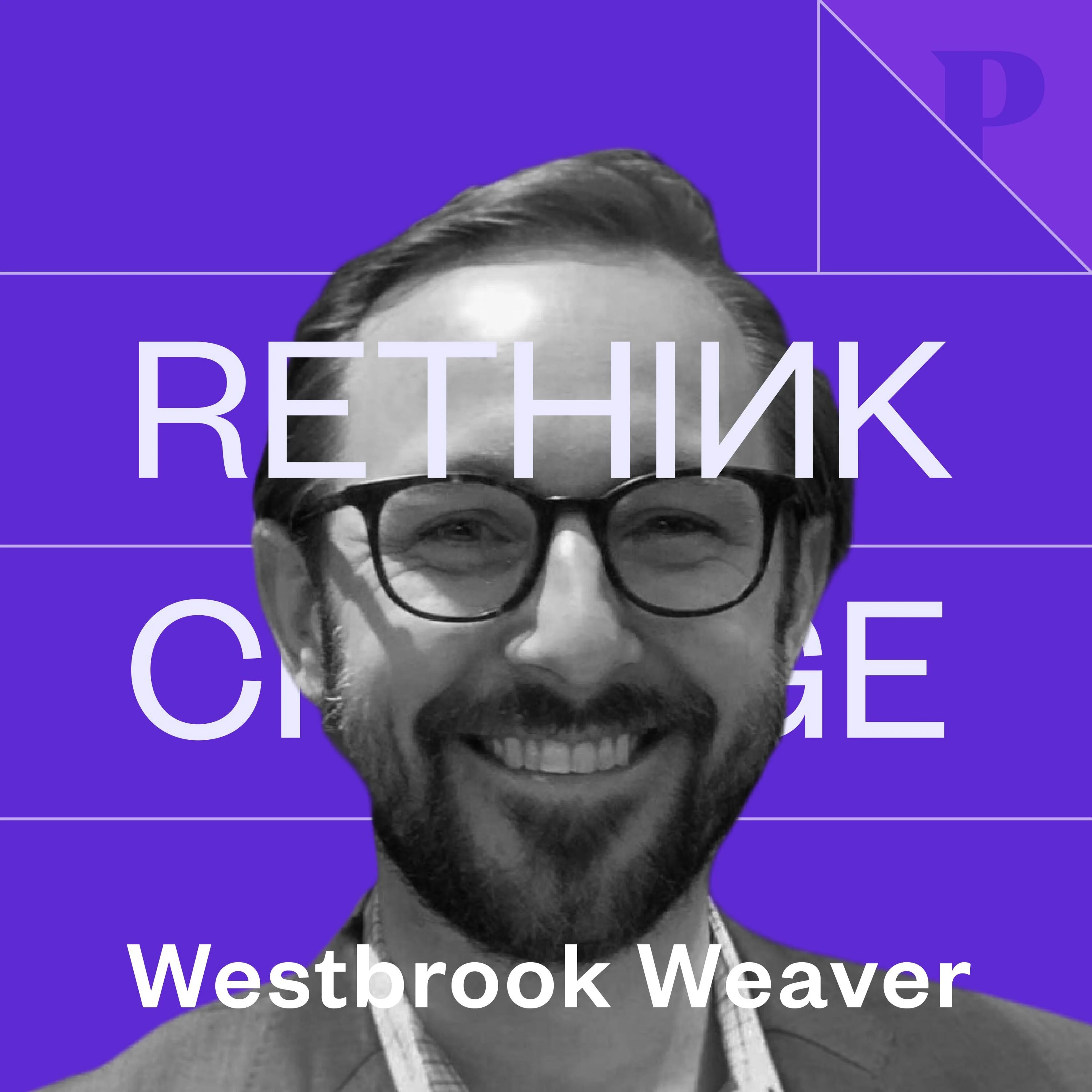
25 — Commercializing Science That Changes Patient Outcomes with Founder and CEO of Tempo Therapeutics Inc
How do you get people to believe in something they can’t yet see? It starts with conviction, an unshakable belief in the problem you are solving and the future you are building. When you pour that clarity into one meaningful problem at a time, selling the vision becomes less about persuasion and more about helping others recognize what is possible, especially in fields where progress directly affects people’s health and quality of life. Our guest this week brings that kind of focus to every stage of innovation.
Shownotes
Things to ponder
How do you get people to believe in something they can’t yet see? It starts with conviction, an unshakable belief in the problem you are solving and the future you are building. When you pour that clarity into one meaningful problem at a time, selling the vision becomes less about persuasion and more about helping others recognize what is possible, especially in fields where progress directly affects people’s health and quality of life. Our guest this week brings that kind of focus to every stage of innovation.
In this episode of Rethink Change, Matt and Ward chat with Westbrook Weaver, PhD, Founder and Chief Executive Officer of Tempo Therapeutics. Dr. Weaver brings more than 7 years of executive management experience and 15 years of life sciences R&D experience to Tempo. He is the inventor of the microporous annealed particle (MAP) core technology, the basis of Tempo’s product pipeline. With deep expertise in tissue engineering, regenerative medicine, and biomaterials, Westbrook brings a unique capability critical to Tempo’s mission at the intersection of materials, medicine, and immunology.
Throughout their conversation, Dr. Weaver reflects on what it truly takes to lead a medtech company built on breakthrough science and unrelenting uncertainty. He explains how he translates complex biomaterial technology into clear value for clinicians, investors, and regulators, and how staying disciplined around a single real-world problem became the turning point for Tempo’s growth.
He also shares why embracing risk, listening deeply, and surrounding yourself with experienced operators are essential skills for anyone looking to lead in a highly regulated, innovation-driven industry.
- Resources
- Find Westbrook on LinkedIn
- Chapters:
- 00:00 Intro to Guest: Dr. Westbrook Weaver and Tempo Therapeutics
- 02:30 Challenges in Biotech: Finding the Right Problem to Solve
- 04:03 Simplifying Tempo's Mission: Improving Lives of Skin Cancer Survivors
- 06:10 Tempo's Innovative Solution: Synthetic Biomaterials
- 07:28 Commercialization Strategy and Market Challenges
- 11:27 Expanding Applications: Future Directions for Tempo's Technology
- 19:05 Lessons Learned: Imposter Syndrome and Team Building
- 22:40 Navigating Change: From Scientist to CEO
- 35:30 The Importance of Regulatory Bodies and FDA
- 37:02 Final Thoughts and Advice for Aspiring Entrepreneurs
Transcript
[00:00:00] The job of A CEO is to have a very strong conviction about an idea and to sell that idea to everyone. You have to focus on one problem, get your solution out there, demonstrate that the technology that you have truly is transformative and can do the thing that you can do. And if you can complete that arc, you can unlock all the other stuff. It's not about the money, it's about whether or not you. Think you can withstand the risk. That's all based off of have you identified a real problem? If you've identified a real problem, all of the hardship is worth it because you can have that North star. There's a real problem that somebody really, really wants you to solve for them. Let's go do that.
Matt Pennebaker:[00:00:37] Today on Rethink Change, I'm speaking with Dr. Westbrook Weaver, the CEO of Tempo Therapeutics. Westbrook has led tempo through major inflection points from pioneering their synthetic map scaffolding technology to preparing for clinical trials. Tempo is redefining [00:01:00] tissue regeneration with injectable biomaterials that help the body heal instead of scar Westbrook. I'm looking forward to having you explain what all that means. 'cause I have no idea anything change.
Westbrook:[00:01:13] Thanks, Matt. Thanks for having me. It's a real exciting opportunity to be able to chat with y'all today.
Matt Pennebaker:[00:01:18] Awesome. So for starters, why don't you just tell us a little bit about Tempo?
Westbrook:[00:01:22] Tempo is, uh, in a sense, my, one of my babies Tempo was, was something that came out of. Work that I was doing in academia. So I was getting my PhD in biomedical engineering at UCLA and I did that work for my PhD and then was kind of continuing work as a postdoctoral researcher at UCLA, working with some collaborators in the biomedical engineering department, chemical engineering and the departments of medicine. And we basically kind of stumbled across, uh, an, an invention of a new way. To think about making a biomaterial and I can talk about what that is. And ultimately, that technology that we developed and the intellectual property developed there, we spun out into a startup company that we called Tempo Therapeutics. I was one of the co-founders, uh, became the CEO that was nine years ago. Uh, have been building that ever since. So. Tempo still is a fairly small company. We're under 10 employees, you know, very virtualized company focused on technology, innovation and product development. Uh, but ultimately we kind of had to focus on what we were gonna do with the technology that we had created. Right. I think, uh, one of the things that has been most challenging, and I'm sure a lot of. Probably biotech or med tech founders have this challenges, especially when you're a engineer or a scientist starting a company. As you think a lot about the technology and you're like, okay, I've created this thing. What am I gonna use it for? I've got this hammer. What nail am I gonna hit? And a big challenge for us was going through that process of, of determining what is the right thing to do with the technology that we have, which is actually, I don't know, in my opinion, a much. Harder way to go about the process that all companies should do, which is what's the problem that I'm solving and can I find a, a thing to solve that problem? So it's sort of like we went in the opposite direction from the way that if I could do it over again, I would do it the opposite way. I would really focus on what's a real problem in the world to find what that problem is. Understand how that affects people, right? How they view that problem. Then just go be technology agnostic as to the solution to that problem. I think a lot of times, um, and this is true for us, you spend a a lot of time and effort trying to solve a problem, married to a technology. We've been lucky in being able to find a tech a problem that actually our technology is well suited to solve and have really focused in on that problem, which I can, you know, talk about. Moving forward. But I think that that's, that's something that was a big challenge for us in the early days is going that kind of opposite direction in that process of, I've got a tech, what's the problem? Rather than focusing on a problem, making sure it's real and then not worrying [00:04:00] about where you get the solution from as long as it's the solution for the problem.
Matt Pennebaker:[00:04:03] So how would you simplify what Tempo does? Or do you have an analogy of what it does?
Westbrook:[00:04:08] So, when I talk about what Tempo does, now, I don't even talk about the technology. I say, and what, what Tempo does is we are making. Skin cancer survivors lives better. That's what we're doing, right? People who have skin cancer, whether it's melanoma or non-melanoma, skin cancer, they can get that skin cancer surgically removed. And especially with non-melanoma skin cancer, that's a very effective procedure, right? Effective 99.9% of the time. But they have a lot of challenges living their lives after that surgical procedure, especially because non-melanoma is a recurrent condition. People are gonna get that over and over and over again. And so what TEMPO does is it. We, we focus on making those people's lives livable. We let them get back to their lives as quickly as possible after those skin cancer surgeries, knowing that, you know, some of these patients are gonna have it over and over and over again, and you don't wanna live your life just going in and outta surgery, you know, so that's what we're trying to do at Tempo, is make the, the lives of skin cancer survivors better, back to normal, faster, um, and being able to feel good about yourself after you have to get that skin cancer removed.
Matt Pennebaker:[00:05:05] Ward can relate. He, uh, he is a member of that group.
Westbrook:[00:05:08] Exactly. Um, I mean, it's a, it's a growing problem. I mean, five and a half million people in the United States every year are diagnosed with a basal cell or SPL cell carcinoma, which is a non-melanoma skin cancer. About 2.7 million of those people get a surgical procedure to remove that non-melanoma skin cancer, and about a million of those people have a very long and challenging recovery process after that surgical procedure that can last six to nine months. Usually the best case scenario is you have a pretty big scar or a big divot in your face or your head because it's sun exposure is what leads you to get these non-melanoma skin cancer. So it's in typically areas that are, you know, what you might call cosmetically sensitive. But you know, the way I look at it is when a non-melanoma skin cancer survivor looks at themselves in the mirror. We want them to see themselves. Right? Not somebody that's got a bunch of pock marks on their face and they're like, oh, I'm just always focused on these things that are so negative about myself. That's what we want. That's the problem that we wanna solve. So you no longer have those divots in your head. Those deep divots. Exactly. So what we do, and we can talk a little bit about our solution, right? So this is kind of where the tech and the solution comes in. So we create and ma manufacture and sell a fully synthetic. Biomaterial that comes in a little squirt syringe that a dermatologic surgeon, who's the person that's doing the skin cancer surgery for you after they remove that skin cancer, and there's basically a big kind of hole in your head or your face. They fill up that hole with our material, and it's a flowable material that kind of looks like hair gel basically. It fills up the volume of that. Area where the skin cancer was, uh, and it actually becomes a part of the patient. So it integrates with the patient's own tissue, the patient's own cells grow into that three dimensional matrix that our product creates. And what, what it does is it completely eliminates something called dermal atrophy, which is the divot that's formed and the skin afterwards. Um, and it significantly reduces hyper and hypopigmentation, which is kind of the, the discoloration of a scar. That forms afterwards. So we're basically able to restore the contour of the face or the head, and we're able to restore the skin coloration of the face or the head. So that allows that person to not have this thing on their face or their head, and it's a single procedure. It's done one time at the time of surgery. Again, it allows that patient to get to recovery faster, and it allows them to recover to a place where they can recognize themselves again.
Ward Pennebaker:[00:07:28] Can you see yourself going to market where your company salespeople will go to the d ermatologists or would it go through a drug company or a device company that would become your rep? So you they would be OEMs. In the early days, we
Westbrook:[00:07:43] are actually going to be doing the sales, um, and the marketing of our own products. So in the dermatologic space, in the MOS surgery space. So MOS is the name of the procedure that's done. Most surgeons today don't have any products that were developed for them. By them. They are currently being sold or attempted to be sold products by reps that come into their office. That was developed for another patient, not developed for their patient, not developed by them with any of their input. And what we wanna do is we wanna develop something for most surgeons, with most surgeons and involve them in every step of the way. And that allows us to then actually undergo an early commercialization effort with very little sales and marketing force needed now eventually. Our goal is to scale that either through a commercial partner, like an a branded commercial partner or an OEM or kind of contract Salesforce, but it's all based off of early success in a very small targeted release. The way I see it is we need to show that our sales cycle works. You need to reduce that sales cycle to practice. You need to show reorders. You need to show that your customers want your product over and over and over again.
Ward Pennebaker:[00:08:55] You wanna be able to have your salesperson sell one thing, not come in and say, here's my 150 items, what do you need? This is like, this is all I do. 'cause I know this is what you need.
Westbrook:[00:09:06] I agree, and, and that's really where contract sales forces can be very challenging because you know, those sales reps are motivated to do what's right for them. Which is I'm gonna sell the thing that gets sold the most. And again, the what? The strategy that we're taking, which is very different than any of the companies that are currently trying to sell to most surgeons, is we want to be evidence-based, clinical trial data, randomized control, clinical trials. There is so much out there in the post-surgical healing space that, you know, sales reps are going to try and sell stuff. Based off of a, a case study or a couple of case series, it's like if I'm a surgeon, how am I supposed to know what the right thing is for my patient? If you can't, if you can't show me real clinical science, it's asinine, honestly, because how could it possibly be the best thing for the patient if the surgeon doesn't have the information to make an educated decision about what product they should use?
Matt Pennebaker:[00:10:00] So what, what's your communication strategy gonna be to the early adopters of these doctors? Because again, you're in this unique spot where even though the patients are the end users of the product, the doctors are really your target audience.
Westbrook:[00:10:11] A hundred percent. Yeah. I guess, I guess technically the patient is the end user because the product is being applied to them and they are agreeing to use it because they have a set of choices. And I, and I don't want to misrepresent or say anything that's, that's not true here. I'm saying my opinion, my viewpoint, the surgeon. The doctor is the customer.
Ward Pennebaker:[00:10:32] Absolutely. Because the patient looks to the doctor who's totally got the problem, who's gonna absolutely fix the problem, and they're gonna say whatever it takes to fix the problem.
Westbrook:[00:10:41] Exactly. You know, when I, I'm just trying to envision, when I think about it, I envision myself to being the patient. I go into my doctor, I have a skin cancer. My doctor's going to treat that skin cancer. I'm gonna say, doc, you do what you think is the right thing to do. Because I personally trust our medical education system to train doctors to be able to do the best thing for patients. So therefore, my customer is the doctor and I need to convince the doctor why this is the right thing for their patient because then if they believe that that's the right thing for their patient, they're going to use it for that patient.
Ward Pennebaker:[00:11:13] Say for example, everything's gonna be approved, you'll be on the market in three years. I don't know how long it's gonna be. And then you sit back and go, okay, what am I gonna do next? Where, where can I use this te technology next? What are you thinking?
Westbrook:[00:11:27] Other areas that we are looking at and actually doing some early development in for our technology, um, are in the cranio facial reconstructive surgery arena and what's called ear, nose, and throat. So basically what we're looking at in general. Is a injectable version of our product that goes through a needle that can fill space inside the body. Um, so rather than being applied topically to restore volume after skin cancer, it, it's a similar concept, but we're, we're kind of creating volume inside the body and we're using it for really three key areas. One is airway restoration, so volume airway restoration. That can be either related to congenital defects like cleft palate, cleft lip, or retropharyngeal insufficiency, which is a very long word for, you know, saying that your airway is not, is malformed. Um, and basically injecting our material to kind of fill up different spaces to basically structure the airway as it was meant to be structured. Um, and, and again, what is unique about our product is that it's a synthetic product and it goes into the volume that you want to inject and it kind fills up the. Space, but it's actually replaced with the patient's own tissue, right? So you can create permanent volume inside people, but the material doesn't have to be there forever, right? Um, so being able to restore airway volume and congenital defects, or actually in aging patients that have something called glottic insufficiency, um, where your vocal folds just kinda get smaller and smaller over time, and then you start to aspirate and you have a really high risk of pneumonia. So that's kind of one area that we're developing in. Um, we're developing in another area, which is actually urologic, again, a similar concept where you're basically looking at patients that have stress, urinary incontinence, being able to fill the wall of the ureter to be able to make it a little bit thicker so that those patients can actually alleviate the symptoms of stress Urinary incontinence, again, what we're doing is we're filling that space with the material. That material is replaced by tissue and kind of creates permanent volume. Um, and we're also looking at some aesthetic AR areas, so being able to treat. You know, it might be either facial lipoatrophy or for purely aesthetic reasons, being able to fill up and kind of sculpt different areas of the face. Uh, and then a final area, that's something that's kind of far off but we're very interested in is actually, uh, what we call structural heart, um, which is jargon for literally actually physically treating the heart. So cardiovascular is a general area, but we're focusing, um, specifically on treating the heart for patients that have heart failure. Where what happens is the wall of your ventricle, which is a part of your heart, actually thins out, um, because you've maybe had a couple of heart attacks, um, over time. Micro, you know, small heart attacks. People, once people get into heart failure, that ventricular wall, the muscle is so thin that basically your heart starts, just starts to like balloon out. That's what leads you into heart failure. And our concept is that by, uh, introducing our material as a filler, basically into that wall, you can bulk it back up and you can actually restore some function in the heart. So again, that's way off in the future, but these are kind of the areas that we're looking at very generally. The way that I see our businesses initially, we're looking at topical application of our product for dermatologic purpose. Then we're taking that technology and trying to take it deep in the body and see if we can actually restore some function of critical organs and tissues, uh, by filling it up as well. And so that's kind of, that's kind of the thought process. Pretty amazing. But again, the way I look at this is everything has to be hinged on the first success. You know, as a, as a engineer and a scientist, I was always focused on the platform initially, and it's like, oh, would you do all these things? We're gonna go boil the ocean, let's do it. You know, that sounds neat, but you just can't do it. You just can't do it. You have to focus on one thing, one problem, get your solution out there, demonstrate that the technology that you have truly is transformative and can do the thing that you can do. And if you can complete that arc, you can unlock all the other stuff. But if you get too sidetracked with all the other things, you're never gonna complete the first arc. And then you're just gonna be sitting in this, you know, kind of nowhere land forever. And I think that's, that's where we started off, frankly. And then once we got focused and we really do got dialed into skin cancer, um, now we have a clear path for how to complete that first arc.
Matt Pennebaker:[00:15:30] So this is really transformative. Technology, it seems like breakthrough, but there has to be other companies that are making at least a Oh yeah. Achieved similar type of a product. How do you communicate your value differentiation when you're talking to investors, when you're talking to a potential, you know, organizations,
Westbrook:[00:15:47] so it has to be very focused on the specific indication and the specific patient you. Again, when you're trying to do the boil, the ocean approach, you have too many different competitors that are in different areas and you can't explain all of those things at once and it gets too confusing. That's just, honestly, that's another reason why you have to be focused. 'cause you have to focus on, here's where I'm going, here's what my patient is, and here's what that patient currently has an option for today, which is a competitor for us. And then here's the other things that are being developed for that patient. That is a story that you can tell to walk through that story with the skin cancer patient. The options that they have today are a complex surgical reconstruction procedure or, um, the use of something called a bioengineered skin substitute, which is basically a tissue taken from another person or an animal and dehydrated. Uh, and packaged into a package, and it basically comes as a sheet. And those things can be applied to the open surgical site with the idea that they can kind of help with the healing process. So those are our competitors today. Bioengineered Skin substitutes. Because they're delivered as sheets and they have natural sources of material are not very well adopted in the dermatologic surgery end of things. They're used very commonly in chronic wound treatments, so like diabetic foot ulcers, foot wounds and things like that. Chronic wounds. Um, but they're really not adopted very well in the derm end of things are used in less than 2% of cases. The reason being that they don't restore skin contour because they're thin sheets. They're not volumetric. The sourcing of the material. Honestly, a lot of people don't want to utilize, whether it comes from a pig or if it comes from amniotic tissue, it's not something that people really want to use that much, so the patient isn't really interested in using it. Now, remember, this comes back to understanding what's the value proposition to the patient, right? The patient is presented with an option. Let's imagine you're a diabetic foot ulcer patient and you have this chronic wound that you've had for two years. Your options are, get this wound healed, or get a below the knee amputation. Right. 50% of the time, that's a different calculus than if you're a skin cancer patient and you get your skin cancer removed and you say to yourself, do I want to have a scar that I'm really not gonna like, or can I heal and have no scar and have a much better outcome and a better quality of life? Those are two different calculus equations. Understanding that calculus and understanding how you provide a patient with a product that's going to deliver the value that they want at the price point that is the right price point. So again, these bioengineered skin substitutes are extremely costly. They range from anywhere from $3,500 to $30,000 and the entire cost that Medicare currently pays to treat, um, a skin cancer surgery patient, a non-melanoma skin cancer surgery patient is about $3,500. So again, the calculus there isn't working and we have a unique aspect of our product because it's fully synthetic, easy to manufacture, that we can make it at a price point That makes sense. For the insurer to pay, and then we can still have a great, you know, business opportunity there. So that's the competitive advantage that we have, that none of these other naturally sourced materials have. And also just simply the volumetric nature of our product allows us to rebuild that tissue volume and restore the skin contour.
Matt Pennebaker:[00:18:57] Pivoting away from the, the science and the technology itself and into some of the lessons learned that you've come across along the way. Can you think of any anecdotal stories or just times to where you had imposter syndrome of, oh my God, I'm in over my head. That can just provide good insight into the trials and tribulations of just being a CEO, an emerging company. I'm having imposter syndrome right now.
Westbrook:[00:19:21] It, uh, apparently never goes away. Uh, I think that actually one of the things that's so true about running, uh, about being, even being involved in a startup and much less running a startup is there is never, it feels like there's never time to just like rest. You know, you solve a problem and then you're like, okay, now we've got this new thing that we don't know how to do. Let's learn how to do that. So it's all what you all. I feel like I personally, and I think a lot of people on our team feel like we're always in a situation that we don't know how to solve, and that's just the nature of it. So imposter syndrome kind of all the time. I touched on this a little bit in the beginning about team building. So the founding team for us was to find by the people that were worked on the, worked on the invention of the product and, um, were, or the technology. At UCLA and that was basically the, the founding team of the company and an advisor that we had brought in that had some commercial experience. I think in the beginning, making sure that every person that's a founder in the company sits around the table and has a real conversation with each other about like, what's this gonna look like for each person individually and what does each person want? That's something that, um, is a very important conversation to have because you don't want to get in a situation where. Somebody's doing something they don't wanna do or didn't feel like they signed up for, just wasn't really what they wanted to do. Right. So like for example, in our founding group, I was the only one that came out of academia, which it has worked out well for us, right? Because they have been able to continue to generate early R&D data based off this technology and other areas that we potentially could utilize in the future. Um, and have been great advisors for us, but they're not coming in to be operators. And that's a totally different situation than being an advisor. So I think being very upfront with your co-founders about who's gonna be an operator and who's gonna be an advisor, and understanding the difference in those roles. And also being real about, you need operators of the company. It can't just be one person. So then that kinda leads me to building a team in the company. Um, I, I mentioned previously that you really want to have people that. Have experience in your specific vertical and area. Funny part about this is when we started tempo, we didn't know if we were gonna be a medical device or a drug. We didn't know. You. Sometimes when you're developing these brand new technologies that kind of don't really fit in a box, you, you have to go to the FDA and you have to have conversations with them about like, how are you gonna regulate this? So that was a really interesting learning experience for us to understand, are we a drug, are we a biologic? Are we a device? And then you figure out, okay, well now I'm a device, so I gotta figure out how I, you know, build my team around that. I think bringing in people that have been in startups before is very important. I say that and I laugh, um, but it's because the road is extremely rocky and you have big ups and you have big downs, and you have crunch times, and you have layers of unknown that some people just can't handle. So I think really understanding that you need to bring in people who. Are up for the risk and can share in that with you. Um, is, is super important. Pete, we're complicated. People are weird. We're weird as we're complicated. We're just so annoyingly complicated. That's the biggest like risk factor, I think, honestly, in a company because if you don't have the right group together, you can't execute.
Ward Pennebaker:[00:22:40] So one of the things that we do in these podcasts is talk to people about how they've navigated change. And clearly you've had a couple of things change because you came in as a scientist and then you're made CEO, and then you gotta start running a business and then you gotta start navigating the regulatory environment. On and on and on. How have you done that?
Westbrook:[00:23:05] Well, um, I've been lucky enough to be able to surround myself with people that have done it before. I would say that's, that is the emphatic statement that I'll make over and over and over again. So I had no idea what being a CEO was even about when I decided to do it, which is probably one of the reasons I said yes. Um, you know, naivety is sometimes a good thing. So I would say that the job of A CEO is. To have a very strong conviction about an idea of what you wanna do and to sell that idea to everyone, whether it's a customer, whether it's an investor, whether it's a potential employee, whether it's a consultant, everyone, you're selling everyone on the vision of what you wanna do. Now, you're not gonna necessarily come up with every little piece of that. That's why you have to bring people in to help you think about regulatory, operations, manufacturing, quality, all of these things. But you in the beginning, 'cause you've got nothing to give anyone, you don't even have any money. Right? You have to figure out how do you convince these people to come and. Help you, you know, so in the, in the early days, I was bringing on people as advisors and, you know, allowing them tost, you know, options and equity. But again, you have to sell them on the vision in order for that to mean something to them, right? It's like, if they don't believe in what you're doing, they'll be like, I don't really care about these options. They're not gonna, what, what, what is this worth? Right? But if you can convince somebody that what you're doing is meaningful and they agree in that meaning. You can get a long way in the early days, and so what I have found is that people who've worked in drugs are not good candidates. For team members to come in to work on medical devices, very different industries.
Ward Pennebaker:[00:24:44] Uh, can you give me a short cliff notes version of why that's true?
Westbrook:[00:24:45] Uh, it really comes down to the way that the FDA regulates them and that the way that they're paid for in the marketplace. Those are the two things. So the FDA regulates medical devices vary differently than they do drugs. Medicare, or we'll say private insurers pay for medical devices in a very different way than they pay for drugs. That means that the entire development process and the commercialization dynamics of the products are completely different, and therefore the skill sets are different. And I have. Definitely made that mistake more than twice where, you know, you find somebody who's got a great pedigree in drugs and you, you know, you really like the way that person thinks and they're excited about what you're doing and everybody has the best intentions, right? And then they come in and you realize that like honestly, they're having to learn it just the way you're having to learn it because it's so different than from drug development that you're like, oh man, this actually isn't gonna work out and I need to go find somebody who has the experience in this specific industry in medical device. In general, uh, the clinical requirements for devices are less than the clinical requirements for drugs and biologics, um, just because of the nature of how these things work, right? Devices are implants. They have a physical mode of action. They're kind of guided by like engineering principles for the most part. I mean, there's definitely a lot of overlap with biology, but a drug is something where, you know, you're infusing it into somebody's blood or you know, you're injecting them with something that. Could go anywhere within their body. And so the safety, it, it takes a lot longer to understand the appropriate safety and toxicologic risk profiles. You still have to demonstrate efficacy, right? The effectiveness of the product in both cases. Um, but it's a little bit more burdensome, I think, to demonstrate safety in a drug or a biologic as compared to to a device. Again, this also gets into why they're totally different businesses, because if you think about from the business standpoint, what, like, let's talk about like the risk profile of a business to an early investor. You know, you're gonna invest in this thing in a seed stage, and you've got all this risk in front of you. Oh, coming from all different angles. You've got technical risk, you've got regulatory risk, you've got market risk. You know, if you get all these things in a drug. You really are heavily focused on technical risk. Does your drug do what you think it's gonna do, and can you demonstrate that in a clinical trial format? If you can, you have reduced a significant amount of the risk because the way that our healthcare system works, and at least in the US which is one of the major markets in the world, once you get that drug approved by the FDA. You name your price, and that's what the insurers pay for it. There's no negotiation process. That's, that's not the case for medical devices. You do not name your price and medical device. You negotiate with the insurer or the payer for what your price is. That means that there's a whole nother layer of risk for the business that doesn't necessarily exist. In the drug business, right? You may have less regulatory risk or less clinical risk, but you've got a huge amount of commercialization risk. And ultimately, you know, the insurer is still looking for that level of clinical trial data to show what are you doing for my covered patient, and also, how are you controlling my healthcare expenditure cost? So it's a whole different ball game that you gotta play. With your customer to get to a sale than, than it is in the drug business. And that's why those things are very different, very separate. And the risk profiles are different. And honestly, the investors are different people that in, you know, VCs that invest in drugs don't, don't invest in medical devices for the most part and other way around because it requires a whole different set of operational expertise.
Matt Pennebaker:[00:28:15] And in your business you've got risk, like you said, coming from all angles. So, which, which has been the most unexpectedly difficult throughout the, the, your, your tenure as CEO? For me
Westbrook:[00:28:27] personally, it's actually been the commercialization because that's where I have the least experience. You know, fully admittedly, right? As a, as a scientist who is a first time CEO and med tech commercialization, that is a hard knocks situation. That's, you learn that stuff. By doing it, and if you've never done it before, by definition you don't know. And every product is different and has to be very carefully thought about how you're going to sell that product, what your value proposition is to all the stakeholders in that sale. And you really have to work backwards from that to define what is your regulatory strategy and therefore what is your clinical strategy. And if you don't work backwards, it can be very challenging because you can kind of work yourself into quarters sometimes. And I'll, I'll fully admit that we have done that more than twice.
Matt Pennebaker:[00:29:18] A lot of the CEOs that we talk to. Have been in business their entire career. They were promoted from CEO to CEO or SVP to CEO, and you know, they've just had 20 years of business experience to just know all the pitfalls and everything about it. Here you come in as a biomedical research associate into a CEO role with no real business experience. What were the biggest learnings, are the biggest challenges that you faced? I'm gonna, I'm gonna get real.
And Westbrook:[00:29:44] I'm gonna say, uh, would not recommend, um, honestly, being able to learn in an actual development scenario where you're working at a company in a senior leadership role that could either be technical or otherwise, but learning all of the mechanics of the business and the correct thought processes for how you want to, like what I just talked about, like how if you want to, like, let's say you're at a company and you're working at a medical device company that's maybe they have like, you know, let's just for p urposes of similarity to what tempo's doing. We're working at a medical device company that is focused on dermatology, okay? And you wanna develop a, um, a solution for something in dermatology. The first thing you focus on is what is the problem that you're solving? Who's the surgeon or the doctor that's currently seeing those patients right now? How are they currently making money, seeing and treating those patients? Is your treatment going to disrupt that? And if that is, and that can be a bad thing if you're disrupting a physician's payment stream in a way that causes them to get less money. You have to flag that immediately as a significant challenge that you figure out how to overcome. And if it's, if it's not something that you can overcome, you have to like rethink or back away from that. And if you are not thinking about that aspect. You are setting yourself up for potential failure. And honestly, when I think about like, well, what is it? What is our purpose? Like, why are we here? We're here to try and make somebody's life better, that patient. But there are a lot of things that we have to do in order to make that a reality, which means that you can't be making the surgeon's life worse. You can't be doing that. That's not something that is taught in biomedical engineering classes or you know, in science classes or engineering classes. And I feel like that's something that is learned by doing and it has really changed the way that I think about. Product strategy about company strategy. If I could do this again, I, I might actually have gone to like, work at a company and just kind of see how things go and start to learn and then try and like kind of go off and do my own thing. Now again, should have, coulda, woulda you cannot undo things. And also like we were presented with an opportunity where we thought we had a really transformative technology and as either we were gonna do something with it, or, or it was gonna get sat on the shelf. So we decided to do what we did right. I'll say I've been lucky enough to be able to kind of fail upward or fail sideways and upward. Um, never too far backwards, but honestly, I think a lot of that comes from trying to be as humble as possible and realize that I don't know the answers to things and like really honestly, listen to people. And there have been lots of conversations with many VCs where I've told them what we're gonna do and they're like, Ugh. That's not gonna work. And then trying to understand why they're saying that as best you can, knowing that they have no obligation to tell you that they can just be, they can just hang up the phone and be like, I don't have time for this. I have to go look at 50 other deals today. You know? Trying to learn from that as much as possible has really kind of led me to. This new thought process of understanding, okay, let's focus on the patient and the problem that we're solving and the patient. And then the next immediate thing is understanding what's the surgeon or the physician that's treating that patient, and how do we align both of those stakeholders to want to adopt our product? And if we can do that, then I think we really have something.
Ward Pennebaker:[00:33:01] Part of your management style that comes through is you're not a command and control guy. You're definitely, let's figure this out together.
Westbrook:[00:33:09] I try to be a good listener. I'll be honest. That also presents its own challenges, especially with as, as a CEO dealing with a board of directors and who are, you know, investors sometimes managing up by consensus. It doesn't work and maybe sometimes isn't the right word most times, and I've learned that the hard way. That's something that's a big challenge for me, fundamentally as a person still, you know, that's just like the, the way that I like to approach problems is I like to get around a table, think about the problem, hear everybody's input. Then work on a consensus that we all think is the right one and work towards that and continuously reit, you know, iterate on that as we learn new things. And that, um, works super well with a operational team. Um, it can be very challenging with a board of directors. You know, you really kind of have to have like a, this is what we're doing, this is why we're doing it. Come at me, bro. Tell me, you know, like that's why we're doing it and let's vet this thing out. I just, I, I do not thrive.
Matt Pennebaker:[00:34:14] Well, that's just a totally different way, you know, the business side is one thing, the science side is another, but the management style of all right, sometimes you gotta just say, this is what we're gonna do. We're not looking back. And as somebody who's not wire of that way, I can, I can relate.
Westbrook:[00:34:31] I think that's, that's something that's really interesting about developing medical products, whether it's biotech. Or a medical device company, you go in with a story. That is based off of assumptions that you've made at the time. And sometimes you can go talk to the FDA and it really changes a lot of stuff really fast. You can go talk to them with the, the best due diligence that you've done and present to them your plan. And they come back to you and they say, no, bro, it's gonna be this way. That's not a small change. It might be a change that, that it results in something that was, you know, maybe it was a program that you thought was gonna take two years and $15 million and now it's gonna take seven years and a hundred million dollars. Like no joke. That's the difference. And that can happen overnight. And when that happens, messaging that, figuring out how to, like. Pivot around or through or whatever, um, can be very challenging with, with, um, with investors. And again, it's not like, I mean it should be challenging. Like they've put money in, they're looking to get money out. You gotta figure out how to make that happen. So much can change so quickly in our industry, um, because of regulatory bodies. Operationally, you know, it can make, it can make it very challenging. And I want to be very clear that not only is it our duty and obligation to make sure that every person that uses our product knows that it's safe and effective. Number one, like imagine, could you imagine if you went into a CVS and you bought Tylenol and you couldn't trust that, you know, you could. Take that and it would be safe for you. W like what craziness would that be? That would be insane. Like it's terrifying to think about the FDA. Their purpose is to make sure that every time you go into a CVS and you buy Tylenol, you're good. That's, that's a significant amount of value for every single person that lives in this country. I think it also builds a ton of value in the industry because they are gatekeepers. If you are a, if, if you have a very strong wall up to companies coming into a marketplace, inherently you create more value in the marketplace. So it's like, even if you forget, you know, like even if you're just looking at it from a money standpoint, the f the existence of the FDA actually creates value for you. I think that the FDA is a huge value to every single person in our country and actually, honestly every single person in the world. Um, because drugs that are developed here go across the world. Devices, it's a value creator for the industry. So yeah, it's a blessing and a curse, but more of a blessing than a curse. You know? It's like, yeah, I'm, I'm, I'm willing to go through these very challenging scenarios where you get nasty grants from the FDA because you didn't expect them to say something, and you just have to figure it out.
Matt Pennebaker:[00:37:02] We always ask, is there anything you thought we would ask that we didn't or that we should have?
Westbrook:[00:37:07] This actually came from my co-founder. His name's Don Griffin. He is a professor of biomedical engineering at University of Virginia. Now, I think he was giving a talk on like being like a scientific co-founder and advisor to companies and trying to like give some input and perspective there. It was like a panel of people and they asked the panel hypothetical question, you just got $200,000 and you're gonna go start a biotech company. What's the first thing that you do? And it's funny because he was telling me this on just like a phone call the other day, and I had the exact same thought in my mind as what he ended up telling me, which is the following, number one. I take that $200,000, I go to Vegas and I put it on black and I do it three times in a row. And if I hit three times in a row, then I start a biotech company. And, and actually what I told him, I was like, okay, I've got $200,000 and somebody wants me to start a biotech company. I put it in a high yield savings account, and I run. And I think that the message there is like, it doesn't, the, the amount of money is irrelevant. It's whether or not you're will willing to undertake the risk, and also the fact that $200,000 gets you absolutely nothing, you know, whatever. But I think it's all about, like, it's not about the money, it's other, it's about whether or not you think you can withstand the risk. And again, that's all based off of have you identified a real problem? Because if you've, if you've identified a real problem, all of the hardship is worth it because you can have that north star of like, there's a real problem that somebody really, really wants you to solve for them. Let's go do that.
Ward Pennebaker:[00:38:33] Excellent .
Matt Pennebaker:[00:38:34] Excellent answer.
Ward Pennebaker:[00:38:35] Westbrook. This has been fascinating. Fascinating. Thanks so much for your time. Yeah, thank you guys. I, I really appreciate it.
Matt Pennebaker:[00:38:42] Thanks for listening to Rethink Change. If you enjoyed this episode, please share it and be sure to follow the show so you don't miss a single episode. If you're a disruptor looking to challenge a status quo and don't know where to start or what to do next. Penn eb aker can help find out more at pennabaker.com.